Some careers begin with a carefully mapped-out plan. Others begin with curiosity.
For one of BigeTron’s newest team members, Shakeel Waggie, the journey started as a young boy taking apart his father’s radios just to understand how they worked.
“I’ve always loved electronics,” Shakeel says. “I was fascinated by how all the components worked together to form a complete system.”
That fascination never disappeared. From childhood dreams Inspired by superheroes and technology to designing his own Projects and experimenting with microcontrollers, engineering became a career path and his lifelong passion for understanding how things work and how they can work better.
Today, that same curiosity has brought him to the leading South African based remote monitoring company, BigeTron, where he is already helping to improve products, support production processes, and contribute to the development of innovative solutions for clients. But before joining the team, he experienced something very few engineers ever get the opportunity to do.
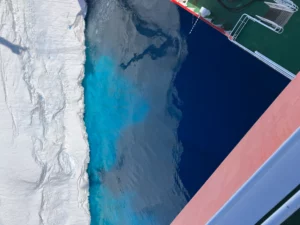
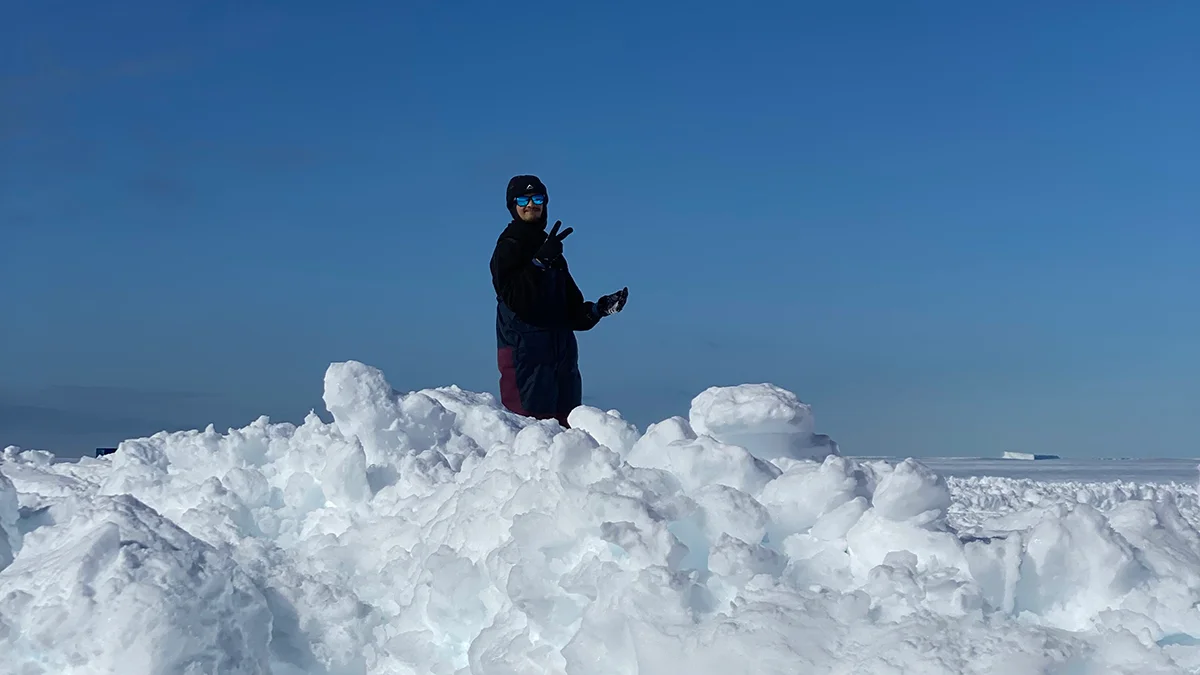
He went to Antarctica.
Engineering at the Edge of the World
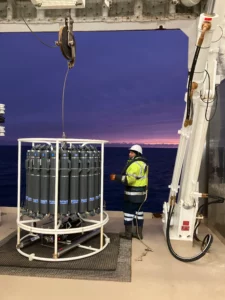
Working as a Support Technician and Glider Development Operator on an Antarctic expedition, he found himself operating in one of the most remote and unforgiving environments on earth. His responsibilities included calibrating and deploying underwater and surface gliders used by scientists to collect critical environmental data. He helped operate sophisticated equipment used to gather water samples at different depths and monitored scientific systems that continuously recorded environmental information such as wind speed, water temperature, and other important data points.
In Antarctica, however, even simple tasks can become complex!
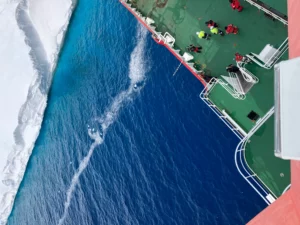
Communication delays, unreliable connectivity, extreme temperatures, moving vessels, and harsh weather conditions all combine to create an environment where technical problems must be solved quickly and creatively.
“Signal was one of our biggest challenges,” Shakeel recalls. “The gliders relied on satellite communication, and sometimes we had to reposition the ship several times just to establish the communication we needed.”
Even routine maintenance presented unique obstacles. Trying to solder or repair equipment while standing on a constantly moving ship tested both patience and skill. Batteries lost capacity in the extreme cold, moisture threatened sensitive electronics, and equipment could only operate for limited periods before environmental conditions became a risk.
Yet those challenges became some of the most valuable lessons of his career.
When Failure Is Not an Option
One of the defining realities of working in Antarctica is that there is no easy backup plan.
If a critical system fails, there is no technician around the corner and no replacement part arriving tomorrow.
That environment develops a different way of thinking.
“You learn to anticipate problems before they happen,” he explains. “You have to think differently, find solutions quickly, and make sure scientists can continue their work regardless of the obstacles.”
The experience reinforced the importance of reliability, redundancy, and practical problem-solving — principles that are directly applicable to the work BigeTron delivers every day.
Whether monitoring water networks, collecting critical operational data, or supporting clients in remote locations, the same philosophy applies: systems must perform when they are needed most.
Bringing Antarctic Lessons to BigeTron
Although he has only recently joined BigeTron, he has already been involved in several projects supporting both production and research and development activities.
His work includes developing wiring diagrams that simplify manufacturing processes and designing a smaller Sigfox housing aimed at reducing costs while maintaining performance.
What makes his approach particularly valuable is his belief that research and development should never be disconnected from real-world operations.
“R&D and field operations shouldn’t be separate worlds,” he says. “The more those teams communicate throughout development, the fewer surprises there are when products are deployed.”
His field experience allows him to view engineering challenges through the eyes of both the technician and the client. Understanding how products perform in demanding conditions helps shape solutions that are practical, reliable, and easier to maintain.
Looking Ahead
As remote monitoring technology continues to evolve, he sees exciting opportunities emerging through predictive analytics, edge computing, intelligent sensor integration, and increasingly connected infrastructure. What excites him most is the shift from reactive systems to proactive ones.
“We’re moving from systems that tell you something has broken to systems that help prevent failures before they happen.”
For industries such as water, energy, mining, and infrastructure, that transition has enormous potential to improve efficiency, reduce downtime, and protect critical services.
A Moment He will Never Forget
Despite the technical achievements and professional growth, when asked about his most memorable Antarctic experience, the answer is surprisingly simple.
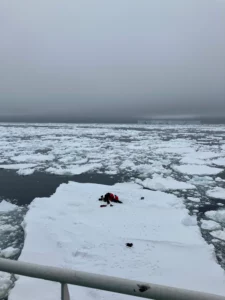
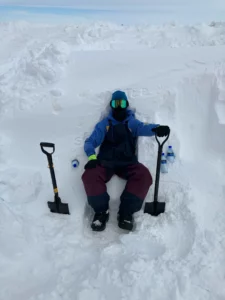
“Lying on the ice while penguins wandered nearby. Watching whales breach in crystal-blue waters.
Taking in endless white landscapes and skies unlike anything he had ever seen before.”
Yet perhaps the most important thing he brought back from Antarctica was not a technical skill at all. It was gratitude. Reflecting on the journey, he credits much of his success to the sacrifices and encouragement of his parents, who continuously supported him and challenged him to pursue opportunities beyond his comfort zone.
That mindset of perseverance, curiosity, and continuous learning continues to guide him today.
And it is exactly this kind of mindset that strengthens BigeTron’s ability to solve complex challenges for clients.
After all, when you have learned to keep critical systems running at the bottom of the world, solving problems closer to home takes on an entirely new perspective.